

The European Union and the Philippines have agreed the main parameters of a free trade agreement that would cover far more than tariffs, according to the European Commission.
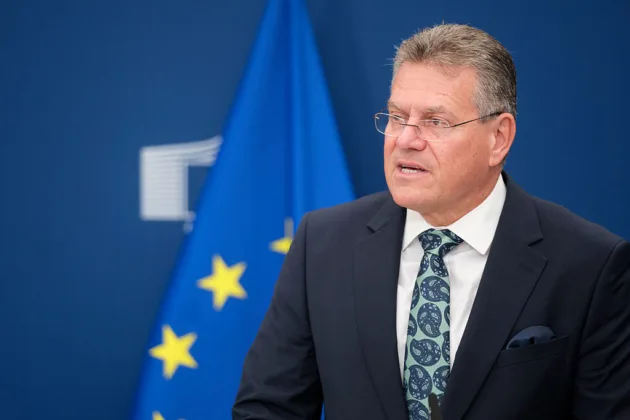
EU Trade Commissioner Maroš Šefčovič and Philippine Trade and Industry Secretary María Cristina Aldeguer-Roque announced the “substantial agreement” after a video call on September 22. The deal is not final though, as negotiators still have to turn the political understanding into legal text.
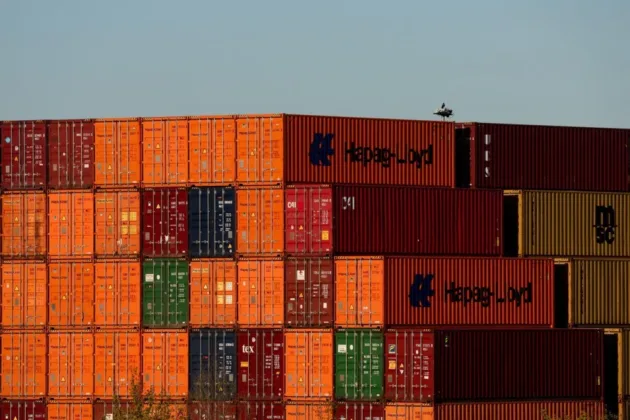
According to the Commission, the pact would liberalise more than 94 per cent of tariff lines, covering over 97 per cent of bilateral trade. Goods trade reached €17.6 billion in 2025 and services €10.3 billion in 2024, while the EU’s investment stock in the Philippines stood at €15.4 billion, the Commission said.
On the EU side, the main beneficiaries would be exporters of machinery, transport equipment and medicines, which lead the bloc’s sales to the Philippines. In agrifood, the Commission pointed to pork, poultry, dairy products and spirits.
Agriculture Commissioner Christophe Hansen said the pact was “good news for European farmers”. He cited tariff preferences for pigmeat and protection for almost 200 EU geographical indications, the protected names that tie foods and drinks to their place of origin.
The EU already runs an agricultural trade surplus of €0.6 billion with the Philippines, according to trade publication Borderlex. That sets the deal apart from the Mercosur agreement with South American countries, which has drawn protests from farmers across Europe.
The most novel element concerns public procurement. The Commission said the deal would open the Philippine government procurement market to foreign bidders for the first time.
Details remain scarce. The Commission did not disclose which agencies, projects or contract thresholds would be covered, noting that Philippine public contracts range from roads, railways and ports to medical equipment and energy projects.
Brussels Signal has reported that procurement talks were continuing. They are complicated by the Commission’s planned Buy European rules for public tenders, which would limit access to some contracts for countries outside the bloc’s network of trade agreements.
Beyond tariffs, the text includes chapters on intellectual property, digital trade with data privacy guarantees, and sanitary and technical standards. Unlike the EU’s agreement with India, it also contains provisions on energy and raw materials, according to Borderlex.
European Parliament trade committee chairman Bernd Lange said the deal was “about much more than just tariffs”.
The Commission said respect for human rights and the Paris climate agreement would be “essential elements” of the pact, alongside a trade and sustainable development chapter. In EU agreements, such clauses allow a party to suspend the deal in the event of serious breaches.
The provision carries weight in Manila. Talks launched in 2015 stalled after two rounds in 2017, amid EU concerns over human rights abuses during then-president Rodrigo Duterte’s anti-drug campaign.
Negotiations were relaunched in March 2024, following a stocktaking exercise agreed during European Commission President Ursula von der Leyen’s visit to Manila in 2023. Six rounds were held through May 2026.
Manila’s sense of urgency stems from the expiry of the EU’s Generalised Scheme of Preferences Plus (GSP+) in 2027. The unilateral scheme has granted duty-free entry to 6,274 Philippine products since 2014, in exchange for implementing 27 international conventions on labour and human rights, the environment and good governance.
A Department of Trade and Industry official said in 2017 that tuna and coconut oil would be the exports most exposed if those preferences were lost, BusinessWorld reported at the time.
EU ambassador to the Philippines Massimo Santoro said the aim was to avoid any gap between the two regimes. He said the FTA was “much more encompassing than the GSP+” and would take precedence over it.
Von der Leyen said she hoped to return to the Philippines in 2027 to sign the agreement. It would then require legal review and approval by member states, the European Parliament and the Philippine Congress.
The European Chamber of Commerce of the Philippines urged legislators on both sides to show swift commitment to ratification.
The Philippines, a country of about 115 million people, would become the third member of the Association of Southeast Asian Nations (ASEAN) with a bilateral free trade agreement with the EU, after Singapore and Vietnam. Deals with India, Indonesia and Australia await signature, Borderlex reported, while talks with Thailand and Malaysia continue.
Šefčovič described the outcome as “a modern, forward-looking partnership between the EU and the Philippines”. The bloc is seeking to diversify its trade amid tensions with China, Russia and the United States.