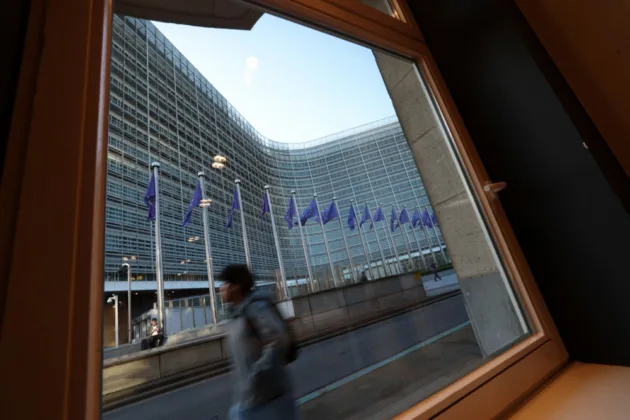



The European Commission has drawn up plans to let public authorities across the European Union exclude foreign suppliers from state contracts on security grounds, in an overhaul of procurement law that a leaked draft indicates is aimed at reducing the bloc’s reliance on China.
The proposal, a single Public Procurement Act that would replace the three directives governing public purchasing since 2014, is due to be presented on September 9 by Stéphane Séjourné, Executive Vice-President of the European Commission for Prosperity and Industrial Strategy.
According to a draft reported by Euractiv, the text seeks to reduce what it calls an excessive focus on price in tenders and to curb harmful strategic dependencies on third-country suppliers. The draft could still change before publication.
Public buyers would be able to weigh critical infrastructure, strategic supply chains and key technologies when awarding contracts, alongside risks such as espionage, cyber or hybrid attacks and interference by actors outside the bloc.
Bidders would also have to explain prices falling significantly below competing offers, a provision Euractiv described as a veiled reference to China. The draft does not name the country at any point.
An earlier version obtained by Reuters in July set out the architecture in more detail. Contracts would have to be awarded on the basis of the best price-quality ratio, with quality criteria accounting for at least 30 per cent of the total score and at least 50 per cent for labour-intensive contracts.
That version stopped short of a blanket “Buy European” requirement. It would, though, let authorities rule out bids for large public contracts containing less than 50 per cent European content and give preference to EU firms in strategic sectors.
The same draft allowed buyers to examine whether a bidder’s ownership, control or financing structure created a risk of foreign interference, and whether the company was subject to third-country laws that might force it to hand over sensitive information.
Because the new rules would take the form of a regulation rather than a directive, they would apply directly in every member state without national transposition, narrowing the discretion governments currently enjoy over how they run tenders.
The market at stake is one of the largest instruments of economic leverage the bloc holds. The Commission has put the annual value of public purchasing in the EU at about €2 trillion.
The reform has been in preparation for more than a year. The Commission published an evaluation of the existing directives on October 14, 2025 and opened a consultation on November 3, 2025 that closed on January 26, 2026. Adoption was originally pencilled in for the second quarter of this year before being pushed back to September.
Trade figures have hardened the political mood in the meantime. Eurostat data show the EU exported €199.6 billion in goods to China in 2025 and imported €559.4 billion, leaving a deficit of €359.8 billion. Exports fell 6.5 per cent on the previous year while imports rose 6.4 per cent.
The gap has continued to widen. The EU recorded a goods trade deficit with China of €98 billion in the first quarter of 2026, the highest quarterly figure since the third quarter of 2022, according to Eurostat.
Séjourné has been among the more outspoken members of the Commission on the subject. Speaking after a meeting of trade ministers in Brussels on May 22, he warned that too few European businesses had moved to diversify their supply chains and said companies should not depend on a single country for all critical inputs.
Procurement has already been used as a lever against Beijing. In June 2025 the Commission barred Chinese companies from EU government tenders for medical devices worth more than €5 million, the first measure taken under the International Procurement Instrument, in response to what it called the longstanding exclusion of European suppliers from Chinese public contracts. The EU medical devices market is worth around €150 billion.
The Foreign Subsidies Regulation, in force since 2023, already obliges companies to declare financial contributions from non-EU governments when bidding for contracts above €250 million.
Beijing has consistently framed such measures as protectionism. Chinese state outlet Global Times reported that analysts there expect the procurement changes to raise costs for European public bodies while giving domestic firms only temporary shelter from competition.
The proposal is not law and will not be for some time. It must pass the European Parliament and the Council of the European Union under the ordinary legislative procedure, and the text carries a transition period, so it would not apply immediately on entry into force.
The file is likely to expose familiar divisions. Italy, the Netherlands and Lithuania have jointly called for new instruments to reduce dependence on China, including tariffs, import quotas and supply chain restrictions, while other capitals have warned that shutting out cheap suppliers will leave taxpayers paying more for hospitals, railways and digital systems.