

The European Parliament has called for police and customs officers working on the front line against drug trafficking to be recognised across the European Union as a high-risk profession.
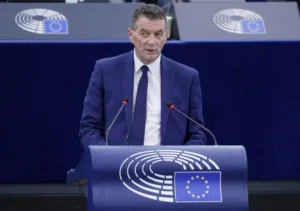
The non-binding resolution was adopted in Strasbourg, eastern France, on September 17 by 601 votes to four, with five abstentions. It warned that organised crime networks were becoming more interconnected, better organised and more aggressive.
Parliament said law enforcement needed more funding and resources at both EU and national level. Those working at sea should be given vessels, equipment, training, staffing and legal protection, according to the text.
The Parliament also wanted stronger information-sharing between customs, police and judicial authorities. It asked Europol, Eurojust, Frontex and the European Maritime Safety Agency to reinforce joint operations in EU waters.
It also pressed for real-time intelligence-sharing with the Maritime Analysis and Operations Centre (Narcotics), or MAOC-N, a body run jointly by a group of member states and the United Kingdom.
The text said criminal groups were using go-fast boats, semi-submersibles and fishing vessels to slip past patrols in the Atlantic and the Mediterranean. Record hauls have done little to dent supply, and French customs found 13 tonnes of cocaine at Dunkirk in a single fortnight in February.
The resolution backed a new EU sanctions regime aimed at trafficking networks, including asset freezes, funding bans and travel bans. It also called on member states to trace, seize and confiscate criminal proceeds far more systematically.
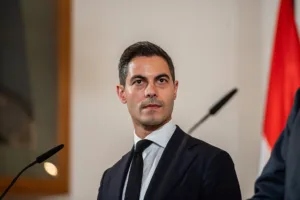
“Drug routes don’t stop at Europe’s borders”, said Malik Azmani, the Dutch Renew Europe MEP who steered the text through the chamber. He said tackling trafficking meant Europe, Latin America and West Africa working as one.
On third countries, Parliament wanted closer legal and operational cooperation with West Africa to break up transit routes, alongside support for building capacity in those states. They also urged work with China on drug precursors, the chemicals used to manufacture synthetic narcotics.
Europol has estimated that half of the most threatening criminal networks in the bloc are involved in the drug trade. The business has been blamed for the violence and corruption that Belgian magistrates say is eating into the machinery of the State.
Parliament resolutions of this kind carry no legal force and the European Commission is under no obligation to act on them. The Commission did propose its own sanctions regime against organised crime, including drug trafficking and money laundering, in July.
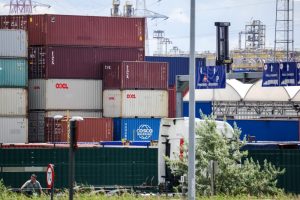
Port security featured heavily in the debate, with Antwerp and Rotterdam still the main gateways for cocaine entering the continent. MEPs said traffickers had responded to tighter controls there by spreading their cargoes across smaller and less closely watched harbours.