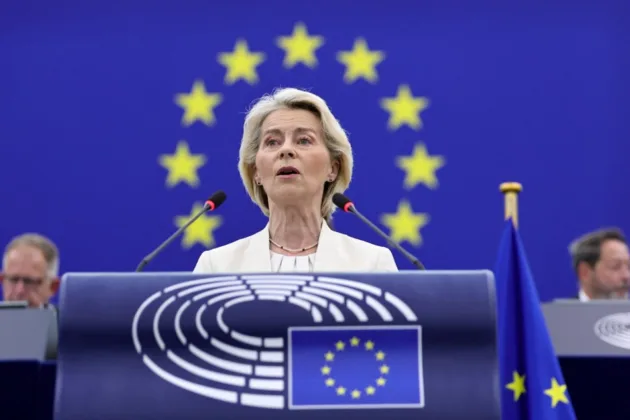
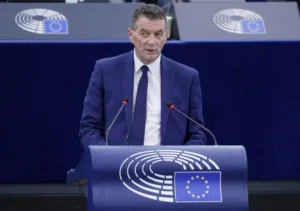

Ursula von der Leyen opened her State of the Union address in Strasbourg on September 16 with the first line of A Tale of Two Cities. Charles Dickens needed two cities to tell his story. The European Commission President has never so much as heard tell of one of them.
There are two Europes as well. The first fills the chamber of the European Parliament and the Brussels bubble around it, and it is built from capitalised nouns. A rough count of the speech gives some two dozen new acts, alliances, plans, frameworks, councils and summits, among them an Alliance for the Future, a European Security Council, a Climate Insurance Alliance and a Congress of Europe.
The second Europe is where the bills arrive. It entered the speech early, in a sentence noting that families were feeling the crises in the cost of living and in housing. Those concerns were real, von der Leyen said, and were being “weaponised” to drive Europeans apart, sometimes from outside and too often from within.
She acknowledged that energy prices and borrowing costs were squeezing households and businesses. Her answer was to double electrification by 2040, which she said could cut the fossil fuel import bill by €260 billion a year. That date is 14 years away and the bills come every month.
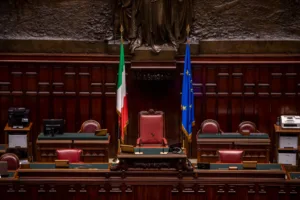
The same day in Rome, Italian Prime Minister Giorgia Meloni’s cabinet dropped the annual road tax for about 14.5 million cars and motorbikes in 2027, with petrol at around €2.13 a litre and diesel at €2.24. The measure is worth between about €129 and €240 a vehicle. Whatever its merits, that is a figure a driver can count.
When Warsaw cut VAT on motor fuels from 23 per cent to 8 per cent in March, the Commission’s reply was that European Union law did not allow it.
Ceuta belongs to the second Europe too. It is a city of about 84,000 people, according to Spain’s National Statistics Institute, and more than 72,000 crossed into it from Morocco on July 30 and 31. Forty-eight days later von der Leyen told the people of Spain that “Europe will be there for you”.
She told MEPs that the Union was “on the right path” on migration, citing a 55 per cent fall in illegal arrivals over two years. What she offered was an emergency returns framework with no text, no criteria and no date. Member states were asked to apply the Pact on Migration and Asylum in full, and the country on the other side of the fence was not named.
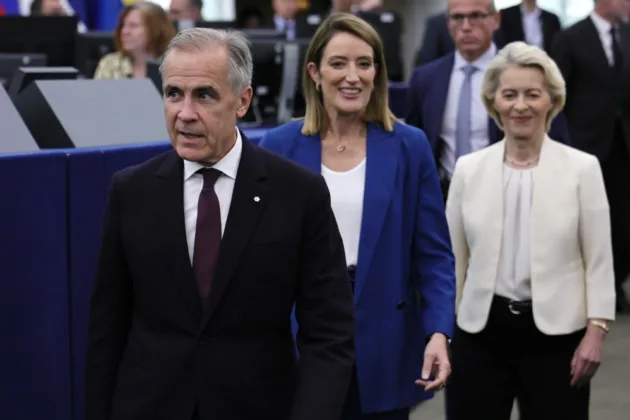
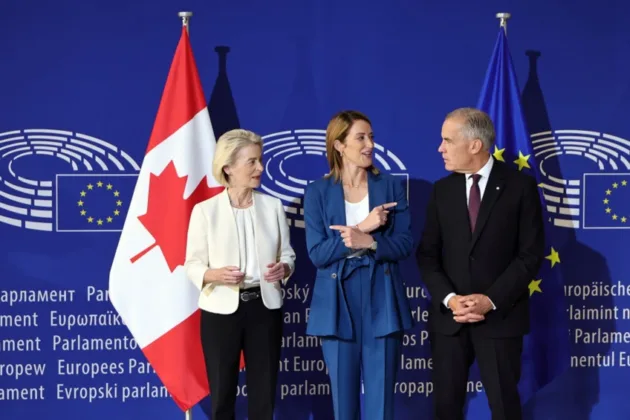
Enlargement stayed inside the chamber. Canadian Prime Minister Mark Carney was invited to make his country the EU’s first associate member, a status that appears in no treaty, three days after he had ruled out joining. MEPs gave him a standing ovation, while the Western Balkan candidates that have queued for the better part of two decades were told that roadmaps would follow for those making most progress.
The second Europe has one instrument of its own, which is the ballot. On September 6, on a record turnout of 77.8 per cent, voters in Saxony-Anhalt, eastern Germany, gave Alternative for Germany (AfD) 43.8 per cent. Ten days later the speech listed ultra-nationalists and anti-Europeans alongside Russian interference and disinformation as forces that want to shatter European unity.
Von der Leyen ended by conceding that Europe still had to win its citizens’ hearts back. Her instrument is a new Congress of Europe, at which the continent’s brightest minds are to draw up a vision.
That gathering, too, belongs to the first Europe. The second one elects the 27 governments whose consent the next EU budget requires, and none of them was in the chamber to applaud.