




Ursula von der Leyen has linked the agenda she set out in Strasbourg to money the European Union does not yet have, telling MEPs that an ambitious long-term budget for 2028-2034 would require “own resources”, the term for revenue raised at Union level rather than by national treasuries.
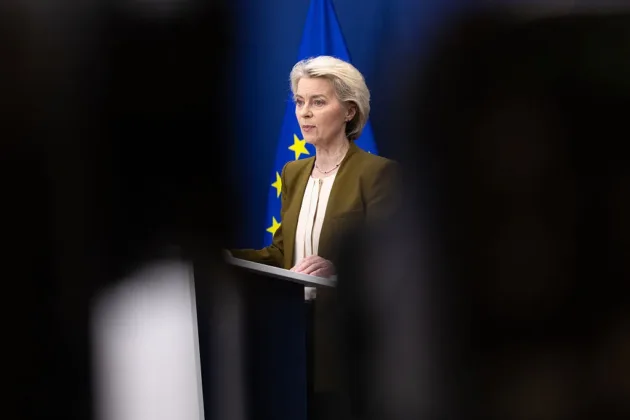
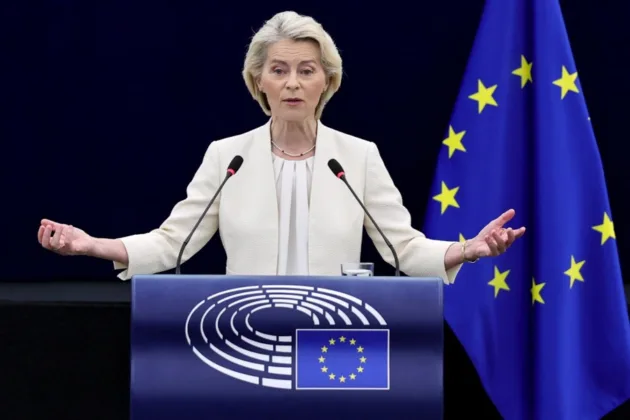
The European Commission President spoke for just over an hour on September 16, opening with the first line of Charles Dickens’s A Tale of Two Cities and arguing that the Union was at once the strongest and the most precarious it has ever been.
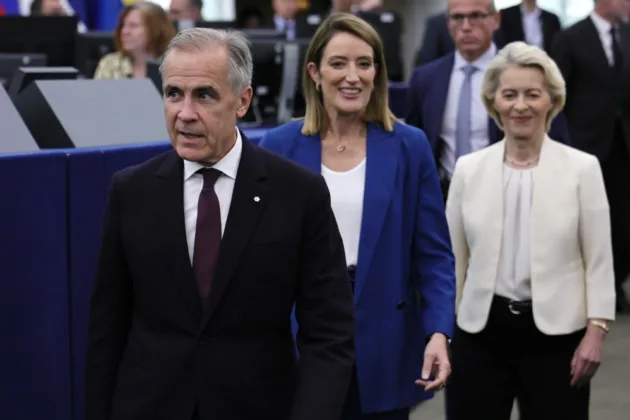
Two announcements framed the day: a plan to make Canada the bloc’s first associate member and an emergency framework to accelerate returns after the Ceuta crossings. Most of what followed carried a price.
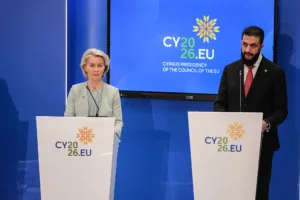
Talks on the Multiannual Financial Framework are being chaired by Ireland until December 2026 and are meant to conclude by the end of the year. Net contributors, Germany among them, have resisted giving Brussels its own tax base. Greens MEP Sergey Lagodinsky told Euronews before the address that the bloc had no alternative to funding its priorities through the next budget.
Von der Leyen paired the request with a deregulation pitch. She said 12 omnibus proposals are cutting administrative costs by around €17 billion a year and pressed for the Savings and Investments Union, a package meant to knit together fragmented capital markets, along with a banking system built for growth rather than for stability alone. Both trace back to the Draghi and Letta reports, and she said the single market overhaul agreed under the One Europe, One Market roadmap could be completed by the end of 2027.
Her economic diagnosis was blunter than the announcements. Unemployment is near record lows, she said, though energy prices and borrowing costs are biting, and clear fiscal choices will have to be made to keep debt sustainable while protecting investment.
On China she was sharper still, putting the trade deficit at €1 billion a day and calling it a tipping point. She promised to use every tool available to rebalance the relationship. Bernd Lange, the German social democrat who leads the Parliament’s trade work, told Euronews that Brussels should use its “weapons” if no deal is struck by the October deadline, putting the odds of agreement at barely better than even.
Defence carried the same pattern of new structures rather than new law. European defence spending has risen by about 80 per cent in five years, the President said, before proposing a mechanism modelled on NATO’s Article 4 that any member state could trigger after a hybrid attack, opening political consultations meant to coordinate a response and discourage escalation. Cyberattacks, sabotage, arson and drone incursions are ramping up daily, she told the chamber.
She also revived the idea of a European Security Council bringing in Ukraine, Britain, Norway and Canada. No legal base, no treaty route and no date were offered for either, and both would sit beside NATO, the OSCE and the Coalition of the Willing.
Climate returned as disaster management rather than as targets. Von der Leyen called this year’s the “summer of truth” and cited 660,000 hectares burned, 12 million tonnes of crops lost and more than 35,000 additional deaths during heatwaves. The response is a European Heatwave Plan, a European water initiative, a European firefighting fleet and a Climate Insurance Alliance to close a gap she put at roughly 25 per cent of catastrophe losses covered by private insurers, leaving national budgets as the insurer of last resort. A resilience framework due next month is to name the 100 most vulnerable territories in the bloc.
On energy she repeated the goal of doubling electrification to 46 per cent by 2040, arguing it would cut the fossil fuel import bill by €260 billion a year, and insisted the mix stay technology neutral, nuclear included.
The digital section went further than anything else in legal terms. An EU Kids Act would bar under-13s from social media and restrict access for under-15s, with platforms carrying the burden of proving their services are safe. On artificial intelligence, she said the companies building the most advanced models were themselves calling for a slower pace at the frontier, and promised talks with leading laboratories alongside Britain and Canada.
The reply from the benches measured the distance. European People’s Party leader Manfred Weber said his group would seek a reasonable reform of the Emissions Trading System and wanted the planned ban on combustion-engine cars stopped. Jordan Bardella, of the right-wing Patriots for Europe, called for European preference in public procurement, arguing that European money should buy European jobs. Greens co-leader Terry Reintke demanded an inquiry committee into weak enforcement of the Green Deal.
Von der Leyen named ultra-nationalists, anti-Europeans and Russian interference as the forces trying to split the bloc, after Alternative for Germany (AfD) swept a regional election in Saxony-Anhalt, eastern Germany. The budget that would pay for her agenda needs the consent of that House and unanimity among the capitals.