


Iran has summoned France’s ambassador in Tehran, Pierre Cochard, to protest at the policing of the school demonstrations that have spread across France since late September. The Iranian foreign ministry also accused French security forces of widespread human rights violations during the unrest.
Cochard was reminded of France’s human rights obligations and told that fundamental freedoms had to be respected, according to the Iranian state broadcaster IRIB. Tehran said it was deeply concerned at what it called the violent repression of peaceful gatherings.
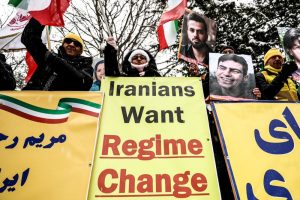
Iranian foreign ministry spokesman Esmaeil Baqaei accused Paris of double standards. He contrasted France’s condemnation of the Iranian crackdown on anti-government protests in January with its handling of French pupils this autumn.
Baqaei said France had urged Tehran at the time to guarantee the right to demonstrate peacefully without fear of reprisals and to show restraint. French ministers were now describing secondary school protests as “urban violence” and pressing for rapid intervention, he said.
The spokesman added that attacks on police, arson and damage to public property could never be justified and that governments had a duty to restore order. His point was that identical conduct was being judged differently depending on where the protester happened to be standing.
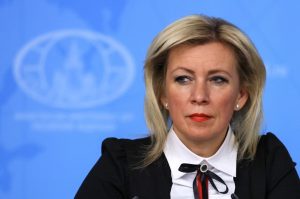
France summoned the Iranian ambassador in Paris on October 7 in response. Foreign ministry spokesman Pascal Confavreux said the envoy had been told that material circulated online by official Iranian accounts was false, that the summons of Cochard was baseless and that the provocations had to stop.
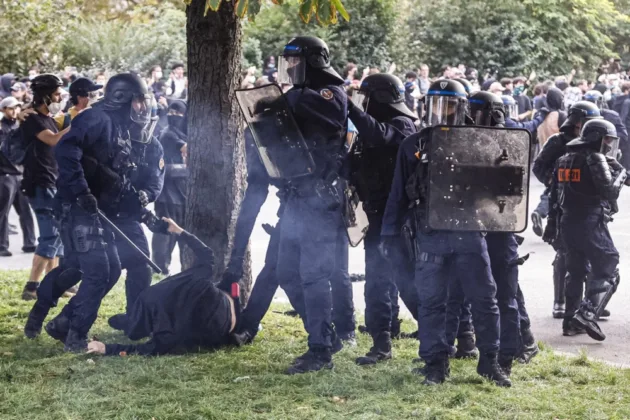
The protest movement began in late September at a lycée in Créteil, east of Paris, over overcrowded classes, long timetables, unreplaced teachers and dilapidated buildings. It has since shut hundreds of schools and produced running clashes with riot police in Paris, Lyon, Lille and Marseille.
The French interior ministry has put the number of arrests at more than 5,000, the overwhelming majority of them minors. France’s National Consultative Commission on Human Rights said on October 6 that it was gravely concerned at a disproportionate use of force.
Brussels has made much the same argument. The European Commission has called for a proportionate police response through its youth commissioner, Glenn Micallef, even though policing is a national competence over which the European Union has no authority.
Relations between the two capitals were already poor before this week. France expelled two Iranian diplomats in August after two of its own were detained and one assaulted in Tehran in July, and the Iranian authorities closed the French language centre in the capital in September.