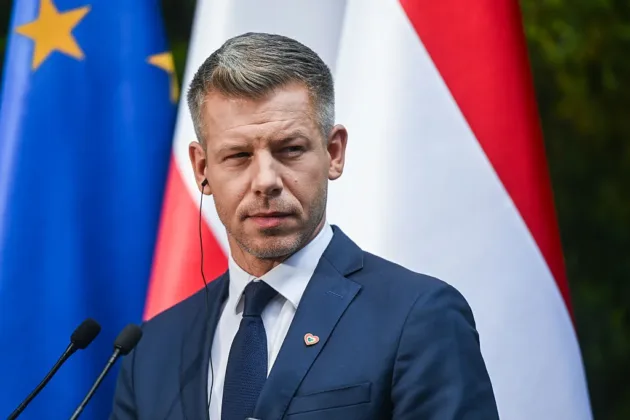


The European Commission is preparing to release up to €17 billion in previously frozen EU funds to Hungary following the decisive electoral victory of pro-European Prime Minister Péter Magyar and his Tisza Party, ending Viktor Orbán’s 16-year rule.
The package consists of roughly €10.4 billion from the EU’s post-Covid Recovery and Resilience Facility (RRF) and around €6–7 billion in cohesion policy funds that had been blocked for years over alleged rule-of-law, judicial independence, anti-corruption, and academic freedom concerns.
In total, Hungary would get an amount worth about 13 per cent of its national budget in one go.
Under Orbán, Hungary became the EU’s most confrontational member state.
Brussels responded by freezing large portions of Hungarian allocations, arguing that accusations the EC made of systemic corruption risks and alleged democratic backsliding made it unsafe to disburse taxpayer money.
This left Hungary as the only EU country largely excluded from major recovery payments.
The April 2026 election changed everything.
Péter Magyar, a former Orbán ally turned fierce critic, campaigned explicitly on restoring relations with Brussels, fighting corruption, and “bringing home” the frozen billions.
His landslide victory was widely interpreted in Brussels as a clear mandate for change.
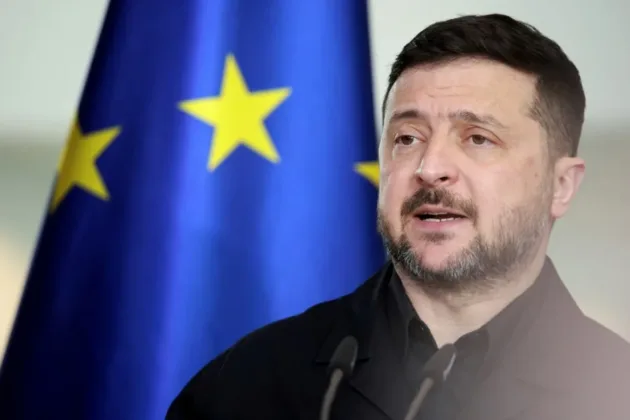
Within days of the result, Ursula von der Leyen held constructive talks with Magyar, signalling a rapid thaw in relations.
Magyar has promised swift reforms on judicial independence, anti-corruption measures, public procurement transparency, and academic freedoms — the exact “super milestones” Brussels had demanded for years.
In return, von der Leyen has publicly welcomed the new government and indicated that funds “will soon arrive in Hungary” once technical conditions are met, with a hard deadline of August 31, 2026 for the recovery envelope.
Magyar’s government must still deliver concrete legislative and institutional changes before full disbursement.
This includes strengthening what the EC calls “judicial independence”, joining the European Public Prosecutor’s Office, improving oversight of public spending, and restoring academic freedom (e.g. allowing universities back into Erasmus+).
The money remains conditional: Continued compliance will be monitored closely.
Critics argue this episode perfectly illustrates how EU funds have become a political weapon.
Funds were withheld from a democratically elected government (Orbán) for political reasons, and are now being fast-tracked for another democratically elected government (Magyar) because it aligns with Brussels’ progressive preferences.
Many observers note that similar rule-of-law concerns in other countries have not always triggered the same financial pressure.
Especially Spain could be seen as a country deserving much more scrutiny.
The Sánchez government has pursued warm relations with China and Venezuela, shown occasional ambivalence on NATO issues, and faced repeated major corruption scandals.
Yet Spain has faced far less financial pressure from Brussels than Orbán’s Hungary ever did.
This case reinforces the perception in many capitals that EU funds are increasingly used as a political tool.
One issue to keep an eye on is how Magyar is trying to force out the current President of Hungary, Tamás Sulyok.
Despite the fact that Sulyok was democratically appointed and there have been no legal or constitutional issues, Magyar is pushing the current President to resign.
This could be the prelude of a problematic fight, draining energy away from where it is needed and and indication of the quest of raw political power, sidestepping basic democratic guardrails.
But don’t hold your breath on Brussels protecting the rule of law in this case.
Still, it could be an indication of another dangerous risk, namely that of nepotism.
There was already a slip-up when Márton Melléthei-Barna was picked as Justice Minister, because he was married to Magyar’s sister and is the brother in law of Magyar. It was only after a public backlash ensued that his nomination was pulled back.
Other nominations have drawn similar accusations of favouritism or insider picks.
Another subject to be closely monitored is how Hungary will now deal with illegal immigration. During the election campaign, Magyar followed a muscular line, accusing even Orbán of being to soft on migration.
However, the EU is demanding that countries walk the line and be “in solidarity with each other”, i.e. all have their own portion of third world migrants. It is yet to be seen how hard Brussels and the new regime in Budapest are willing to fight over it.
For Hungary, the €17 billion windfall will provide major economic relief.
For the Commission, it represents a strategic victory.
This episode raises questions to which the European Union has evolved from an economic community into a highly political, ideologically liberal project.
Access to funds that European taxpayers contribute is no longer determined purely by objective economic or legal criteria, but increasingly by a government’s willingness to align with Brussels’ preferred positions on migration, judicial “reforms,” LGBT issues, foreign policy, and cultural matters.
Hungary under Viktor Orbán was punished for years for defending national sovereignty and pursuing conservative policies. Now, a more liberal-leaning government under Péter Magyar is being swiftly rewarded.
This selective conditionality could turn out to be dangerous as it treats member states unequally, breeds deep resentment in more conservative societies, and risks turning the EU into a vehicle for imposing a narrow ideological model that not all 27 countries genuinely share or want.
In the long run, such politicisation of money could further erode the Union’s legitimacy and deepen internal divisions rather than strengthen them.