

Giorgia Meloni is facing a growing challenge from an unexpected direction: The American Right. Following recent attacks on Meloni by US President Donald Trump, Andrea Stroppa, widely regarded as Elon Musk’s closest associate in Italy, has launched a blistering critique of the Italian Prime Minister and her government, accusing them of shortcomings on defence, internal security and migration policy, while warning that dissatisfied right-wing voters could turn to Roberto Vannacci instead.
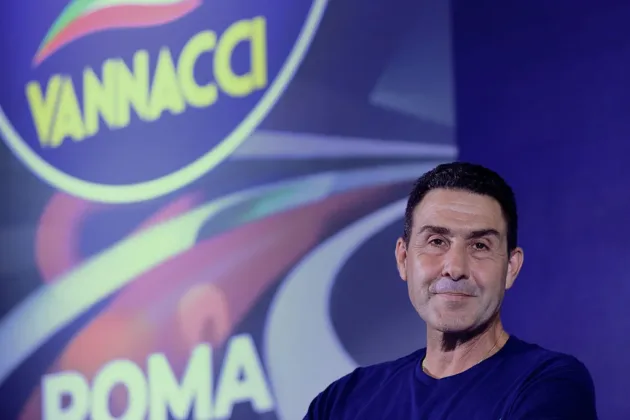
In a post published this week, Stroppa cautioned that unless the government changed course, “the vote will end up with Vannacci” — a reference to the retired general whose new political movement, Futuro Nazionale, is emerging as a potential rival to Meloni on her right flank.
Although Stroppa later denied endorsing Vannacci, his intervention adds to signs that Meloni is now exposed to pressure not only from the opposition, but also from within the broader conservative and MAGA camp that once championed her rise as Europe’s leading right-wing leader.
Stroppa, 32, is a cybersecurity specialist and former hacker who has become one of Elon Musk’s closest associates in Italy. Often described by Italian media as Musk’s main interlocutor in the country, he has acted as a key link between the entrepreneur and Italian political and business circles, particularly around projects involving X, SpaceX and Starlink. His proximity to Musk has made him a prominent intermediary between the American tech billionaire’s orbit and Italian institutions.
The controversy erupted after Stroppa published a lengthy post on X on June 22, 2026 attacking the government’s record on defence spending, internal security and migration. His criticism centred on what he described as a widening gap between the government’s sovereignty rhetoric and its policy delivery, at a time when Washington has been pressing European allies to strengthen both military commitments and border control. He argued that this inconsistency risked weakening Italy’s credibility within the Atlantic alliance while eroding support among right-wing voters domestically.
Referring to Defence Minister Guido Crosetto, he accused the government of sending him into public and diplomatic debates “to look like an idiot”, suggesting Crosetto was left defending positions abroad that were not backed by consistent policy at home.
He also described Industry Minister Adolfo Urso as “a disaster”, extending his criticism to the government’s broader industrial and strategic direction. In the same post, he warned that unless the government changed course, “the vote will end up with Vannacci.”
Those remarks were quickly interpreted by political commentators as an indirect signal of support for Vannacci, whose Futuro Nazionale has emerged as one of the most significant challengers to Meloni from the Right.
Stroppa later rejected that reading. In a follow-up post on X published the same day, he insisted he was “not endorsing Vannacci”, framing his intervention instead as a warning about potential voter drift among those concerned with security, sovereignty and migration.
Even with that clarification, the episode underscores a growing strain for Meloni. Criticism of her government is no longer confined to the Left or traditional opposition forces, but is increasingly emerging from figures linked to the American conservative and MAGA ecosystem that once viewed her as its most successful European ally.
Relations between parts of the US Right and the Italian government have become more tense in recent weeks, with public criticism from Trump and voices close to his political network. Stroppa’s intervention therefore appears less as an isolated outburst than as part of a broader realignment in expectations toward Meloni’s leadership.
At the same time, Vannacci is steadily consolidating his position as a political actor in his own right. Since launching Futuro Nazionale, he has attracted segments of the electorate and political figures dissatisfied with what they see as Meloni’s moderation in office, particularly on immigration, identity politics, security and relations with the European Union.
Whether intended or not, Stroppa’s warning captures a shifting political dynamic: Meloni’s most immediate pressure is no longer coming from Matteo Salvini or the traditional opposition, but from a competitor emerging on her own right flank.