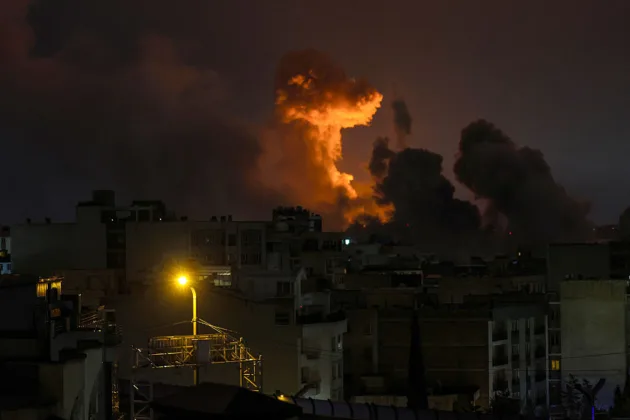



United States air strikes on southern Iran have killed at least three people and injured two others on the island of Qeshm, in the Strait of Hormuz, Iranian authorities have said.
The Hormozgan University of Medical Sciences said the parents of a family and a two-year-old child died when a home in the city of Qeshm was hit. Two other children, aged seven and nine, were taken to hospital, it told the Iranian news agency Fars.
State broadcaster IRIB published footage from the Chah Tangu neighbourhood showing rescue workers searching rubble. The provincial crisis management chief said two children had been pulled out alive and that a search for three other family members was continuing.
US Central Command (CENTCOM) said its forces had “successfully completed a heavy wave of strikes” against Iran. The command said the operation answered attempted Iranian missile attacks on American forces in the Middle East the previous day.
It said it had hit dozens of Islamic Revolutionary Guard Corps targets, among them military command centres, missile and drone facilities, coastal surveillance and defence sites and maritime assets. More than 50,000 American troops are currently deployed in the region, according to the command.
Iranian officials reported strikes overnight on three towns in Bushehr province, including the provincial capital, which lies close to the country’s only nuclear power plant. No casualties were reported there.
Authorities in Khuzestan province, in the southwest, said missiles had struck near the city of Ahvaz and in the towns of Abadan and Shadegan.
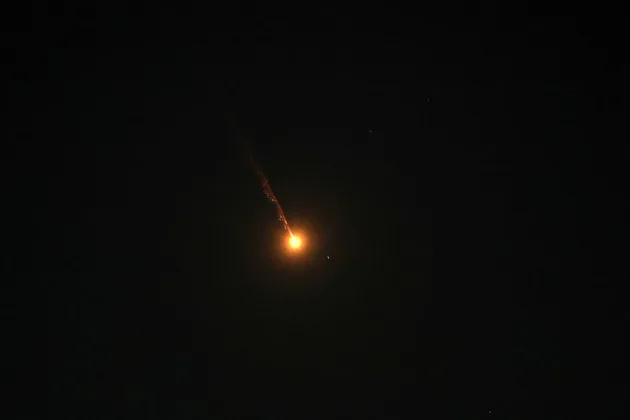
The bombardment followed a ballistic missile salvo launched by the Revolutionary Guard on July 28 against US forces in Jordan. Jordanian armed forces said their air defences intercepted five missiles, while the Guard said it had targeted Muwaffaq Salti Air Base and a CENTCOM facility.
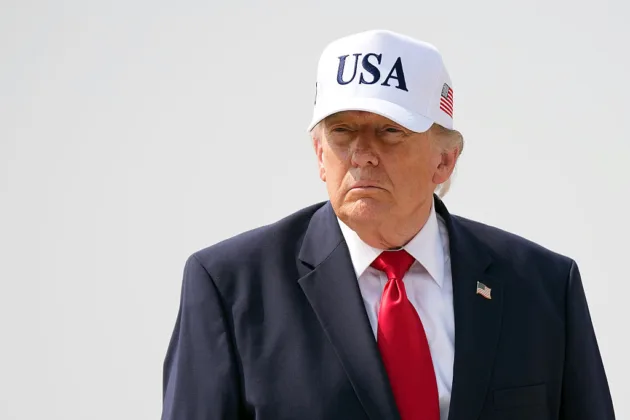
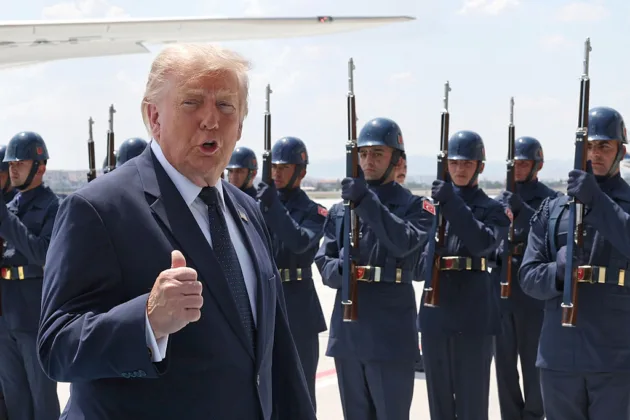
Speaking in the Oval Office on July 29, President Donald Trump said: “We’re going to be hitting them very hard.” He added that it was Washington’s turn to strike.
The raids have broken a pause in US operations that began on July 24 and was intended to give negotiations a further chance.
For Europe the renewed fighting revives the threat to the Strait of Hormuz, through which around a fifth of the world’s oil passes and which has been largely closed since February 28. The EU adopted sanctions in May on Iranian officials and entities blamed for disrupting shipping through the waterway.
Brussels had welcomed a US-Iran framework agreement in June, with European Commission President Ursula von der Leyen pressing for a toll-free reopening of the strait and warning that energy dependency was again being used as a weapon.