




The Spanish Government has kept satellite images obtained by the National Intelligence Centre (CNI) out of the police report sent to the judge investigating the mass entry into Ceuta from Morocco, police sources familiar with the inquiry have said. Ministers invoked national security to hold the pictures back, the sources told the Spanish news site Vozpópuli.
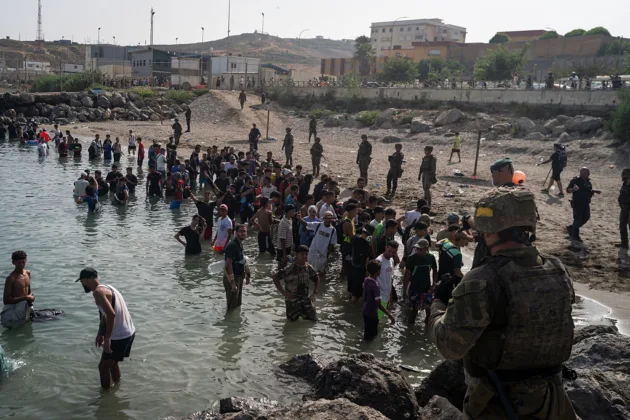
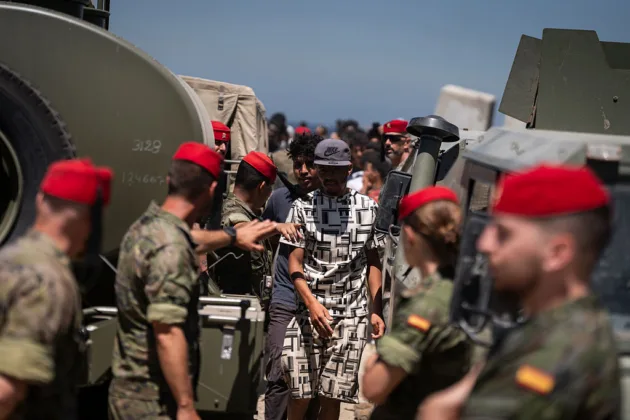
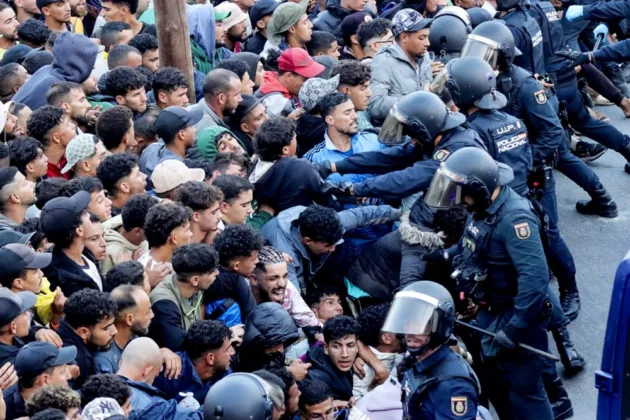
The images were captured during the two days at the end of July when tens of thousands of people crossed into Ceuta, the largest influx recorded at the European Union’s only land border with Africa. They show a column of near-identical vehicles advancing in orderly formation towards the Spanish city.
One of the pictures corresponds to the moment the convoy passed close to Castillejos, the Moroccan border town about eight kilometres from Ceuta. Investigators took the uniformity of the vehicles and their alignment along the route as evidence that they were hire cars chartered with the help of the Moroccan authorities.
The sources said the degree of organisation involved would have been inconceivable without the participation of the authorities in the north African country. They added that the decision to hold the images back had broken the usual chain of transmission between Spain’s police forces and its intelligence services.
The report was drawn up by the Centro Nacional de Inmigración y Fronteras (CENIF), the intelligence unit of the National Police immigration directorate, at the request of National Court judge María Tardón. It concluded that the Moroccan state encouraged, promoted and directed a mass movement of people towards the border, and ruled out that the crossings had been organised by smuggling networks.
The document sent to the judge does contain photographs of Moroccan gendarmes making no attempt to disperse or turn back the crowds gathering at the frontier. It does not contain the satellite pictures, which investigators regard as decisive for establishing what the inquiry is about.
Tardón has ruled that the crossings were not spontaneous and that they may amount to crimes against the peace or independence of the State, against the rights of foreign nationals and of criminal organisation. She has pointed to a clear management from Moroccan territory that favoured the movement, in a context of hybrid warfare.
Interior Minister Fernando Grande-Marlaska complained to the General Council of the Judiciary (CGPJ) after the judge told officers not to pass the report up to their superiors. The council rejected the attempt to question her conduct.
The account emerged a day after the cabinet approved the declassification of 40 intelligence reports on the crossings, including CNI material. The Government said publication would show that it had received no warning of an entry on that scale.