



The former Spanish employment minister who drove through the country’s 2012 labour reform has been killed in the collision between two high-speed trains south of Madrid.
Fátima Báñez, 59, was travelling in the last carriage of the Iryo 6076 on her way to a business event in Seville. Her death was reported by El Debate, which cited two sources at the scene, after the CEOE employers’ confederation confirmed she was on board.
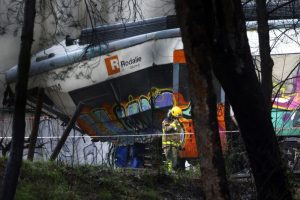
A Renfe AVE bound for Seville ran into the back of the Iryo service, which had stopped on the Madrid-Seville high-speed line near Urda, in the province of Toledo, at 8.54am on October 28. The two rear carriages of the Iryo derailed, and they bore the brunt of the impact.
The regional government of Castilla-La Mancha put the toll at 64 dead and warned it could rise, with 40 of the victims aboard the Iryo. The train was carrying 147 passengers and the Renfe service 397.
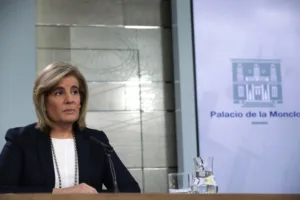
Báñez was minister of employment and social security from December 2011 to June 2018, under Prime Minister Mariano Rajoy, after years as a deputy for Huelva in southwest Spain.
Less than three months into the job she put through a labour reform that cut the cost of dismissal and gave firms more room to vary pay and hours. It was welcomed by the European Commission and the OECD and fought by the unions, who called two general strikes against it in 2012.
Unemployment peaked at more than six million in early 2013 before falling steadily for the rest of her tenure, a record her defenders treat as vindication and her critics as a cheapening of Spanish work.
She left office when the censure motion of June 2018 put Pedro Sánchez in La Moncloa, and moved into business, taking board seats at the utility Iberdrola and the pharmaceutical company Laboratorios Rovi. Since 2020 she had been president of the CEOE’s foundation, where she was preparing the employers’ contribution to the forthcoming Ibero-American Summit in Madrid.
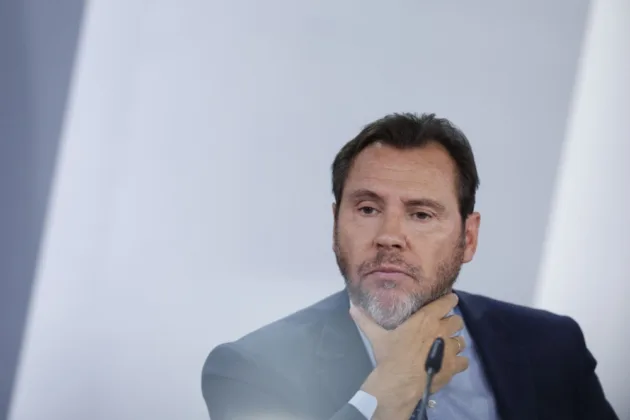
Renfe said its train had been authorised to continue before it hit the Iryo, which had stopped for reasons the operator said it did not know. Transport Minister Óscar Puente ruled out resigning and pointed to the decision taken at the Adif control centre, which he called inexplicable.
It is the second disaster this year on the corridor linking Madrid with Andalusia, after the Adamuz crash of January 18 and a commuter derailment near Barcelona days later.
Sánchez cancelled his diary and travelled to Urda, with his Government facing a general election on November 29. European Commission President Ursula von der Leyen said Europe “mourns” with the victims.