


Serbia’s justice minister has said Ratko Mladić, the Bosnian Serb army commander convicted of genocide, will be buried with the highest state honours.
Nenad Vujić told Banja Luka’s ATV that “General Mladić is a general and the protocols are known,” and that “what belongs to General Mladić will certainly be respected.”
The family, he said, would choose the place of burial. Republika Srpska would not decide.
Belgrade would collect the body from The Hague as soon as the UN Residual Mechanism set a timetable.
“If they said come tomorrow morning, we would be in The Hague and take General Mladić’s body.”
Vujić did not say whether the army would take part or whether a day of mourning would be declared. Date and cemetery have not been announced.
Pro-government outlets had already reported, citing the presidency and ministries, that the funeral would include state and military honours.
Former interior minister Aleksandar Vulin said Serbia owed Mladić a state and military funeral and a day of mourning.
Mladić died on August 27, 2026, aged 84, in the hospital wing of the UN detention unit in The Hague, where he was serving a life sentence.
The Mechanism confirmed the death and ordered an inquiry into the circumstances.
He had suffered several strokes.
A UN doctor this month said death “may occur at any time.” Serbia had asked that he be allowed to spend his last days at home. The court refused.
President Aleksandar Vučić had repeated that request a week earlier. Counsel said he had wished to lie beside his daughter Ana, who died in 1994, in Belgrade.
The International Criminal Tribunal for the former Yugoslavia convicted him in 2017 of genocide, crimes against humanity and war crimes.
The appeal failed in 2021. The central count was the July 1995 massacre at Srebrenica, where Bosnian Serb forces under his command killed more than 8,000 Bosniak men and boys in a UN “safe area,” the worst atrocity in Europe since 1945.
He was also convicted over the siege of Sarajevo. The Bosnian war of 1992-95 killed about 100,000 people. Mladić commanded the Army of Republika Srpska from 1992.
He was indicted in 1995, hid for years with help inside Serbia, and was arrested in Lazarevo in May 2011.
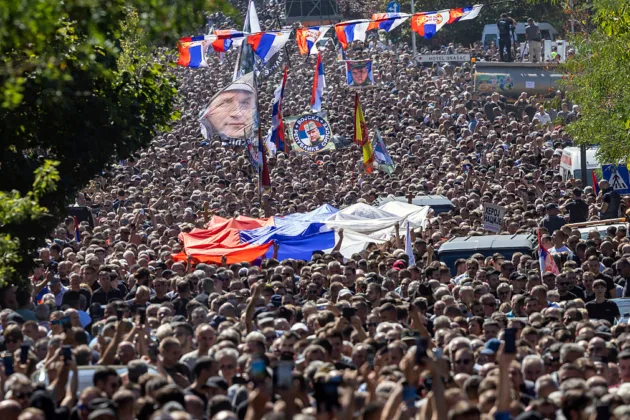
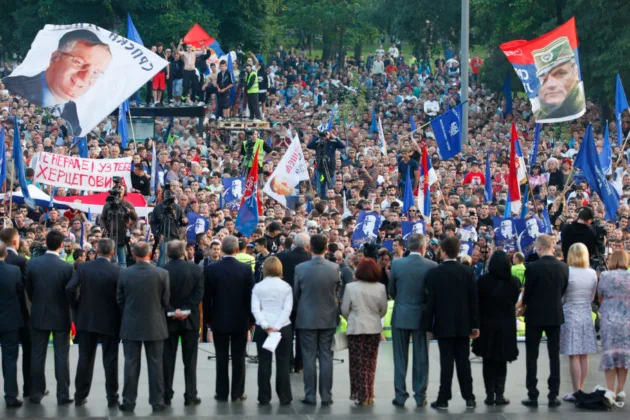
In Republika Srpska, Milorad Dodik and Prime Minister Savo Minić lit candles at Banja Luka’s Cathedral of Christ the Saviour. Crowds gathered in Zvornik, Bijeljina, Prijedor and elsewhere.
Emir Suljagić of the Srebrenica Memorial Centre said death did not bring back the dead or change the judgment.
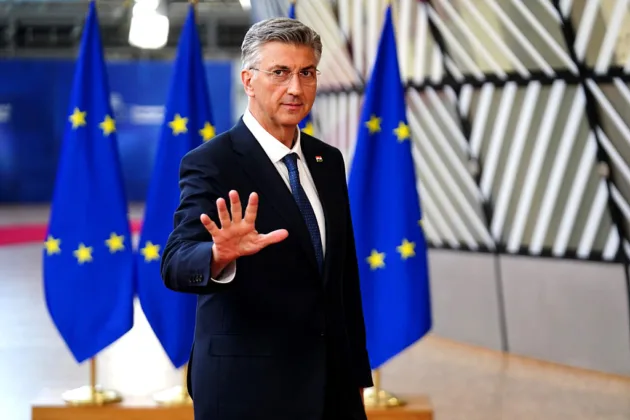
Croatian defence minister Ivan Anušić said talk of state honours confirmed “the policy of Aleksandar Vučić” and “the policy of the 1990s.”
Some Serbian opposition parties called Mladić a convicted war criminal. Others called him a hero.
A state funeral for a man the Hague courts named a génocidaire could put Belgrade at odds with the legal record on which EU accession chapters still rest.
Делије шаљу последњи поздрав! 🔴⚪️#fkcz pic.twitter.com/WLzoKDItme
— RedStarFamily (@RedStarFamily) August 27, 2026