




The Spanish Government led by Pedro Sánchez has committed more than €1.5 billion in cut-price public credit to modernise railway and metro infrastructure in Morocco, Egypt and Uzbekistan since 2018, including hundreds of millions to bankroll Moroccan lines ahead of the 2030 FIFA World Cup, even as Spain’s own rail investment languishes at two-thirds below historical highs.
The figures have resurfaced as Spain grapples with yet another train disaster.
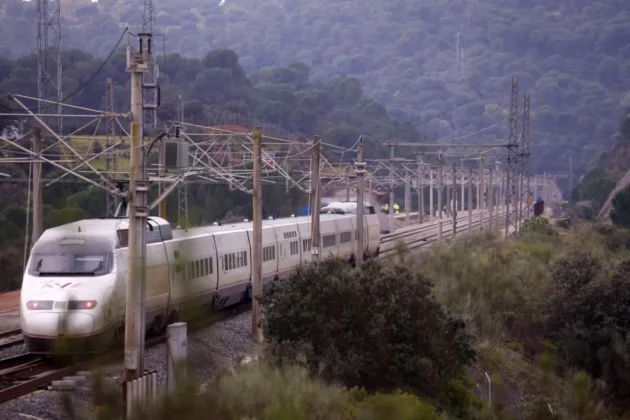
A Renfe AVE service bound for Seville struck a stationary Iryo train between Los Yébenes and Urda, in Toledo province, central Spain, at 8.53am on October 28. The provisional toll stood at least 64 dead and scores injured, with several carriages thrown down an embankment.
It was the second mass-casualty crash on the Madrid-Seville high-speed line in 10 months. On January 18, 46 people died at Adamuz, in Córdoba province, southern Spain.
According to ministerial records and an investigation by conservative Spanish news outlet La Gaceta, the sovereign financing was channelled through the Fund for the Internationalisation of Enterprise (FIEM), an export-promotion facility operated by Spain’s Ministry of Economy, Trade and Business.
The largest individual allocation involves a €754.3 million credit package cleared for Morocco’s state rail company, the Office National des Chemins de Fer (ONCF), signed off by the Spanish cabinet on February 11, 2025.
The capital is earmarked to procure new rolling stock, including intercity trains built by Basque manufacturer CAF, as Rabat rushes to expand its railway network before co-hosting the 2030 World Cup alongside Spain and Portugal.
The package covers up to 40 intercity units, with delivery, commissioning and about two decades of maintenance.
Other operations include over €600 million across several tranches to upgrade Cairo’s metro and supply Talgo-built night trains to Egypt, a figure that climbs to roughly €700 million once two further maintenance credits for metro lines 1 and 2, cleared in December 2025, are counted.
Spain also lent €57 million for Talgo trains in Uzbekistan in 2019 and €190 million the same year for the Casablanca tram network.
The transactions have drawn domestic political fire due to the heavily subsidised nature of the financing.
Under FIEM rules, the state-backed facilities are structured as concessional “soft loans”, providing developing nations with below-market borrowing costs, multi-year grace periods and repayment terms set under the OECD concessional guidelines, with a standard ceiling of 10 years that can be stretched for railway projects.
For sovereign borrowers such as Egypt or Uzbekistan, which face punitive borrowing costs on open capital markets, the Madrid-backed credit lines offer financing at rates commercial lenders would never match.
While the loans are tied credits that oblige the borrower to buy from Spanish industrial manufacturers, the optics have sparked fierce debate against the backdrop of Spain’s domestic transport crisis.
The Ministry of Economy has insisted the money is repayable and not a grant.
According to research published by the BBVA Foundation and the Valencian Institute of Economic Research (Ivie) in March 2026, Spain’s real capital expenditure on domestic railways remains 66.7 per cent below the peak recorded in 2009.
Rail took €4.589 billion of the €16.1 billion invested in public-use infrastructure across Spain in 2025, a total itself some 60 per cent down on 2009.
Opposition parties have repeatedly attacked Spanish transport minister Óscar Puente over acute maintenance backlogs, electrical faults and frequent cancellations plaguing commuter networks (Cercanías) across Madrid, Catalonia and Andalusia.
Investigators examining the Adamuz crash found maintenance took 16 per cent of the budget of Adif, the State-owned infrastructure manager, around half the share of comparable European networks.
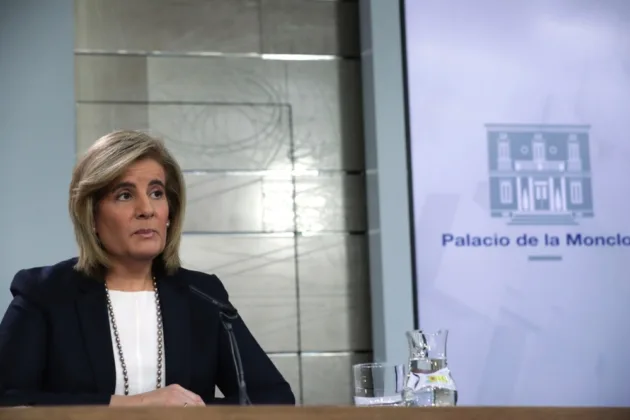
Critics argue it is politically perverse for the Moncloa, the seat of the Spanish Government, to underwrite ultra-cheap, long-term credit so a co-host can build high-spec World Cup trains, while Spanish commuters endure daily platform disruptions caused by underfunded domestic tracks.